
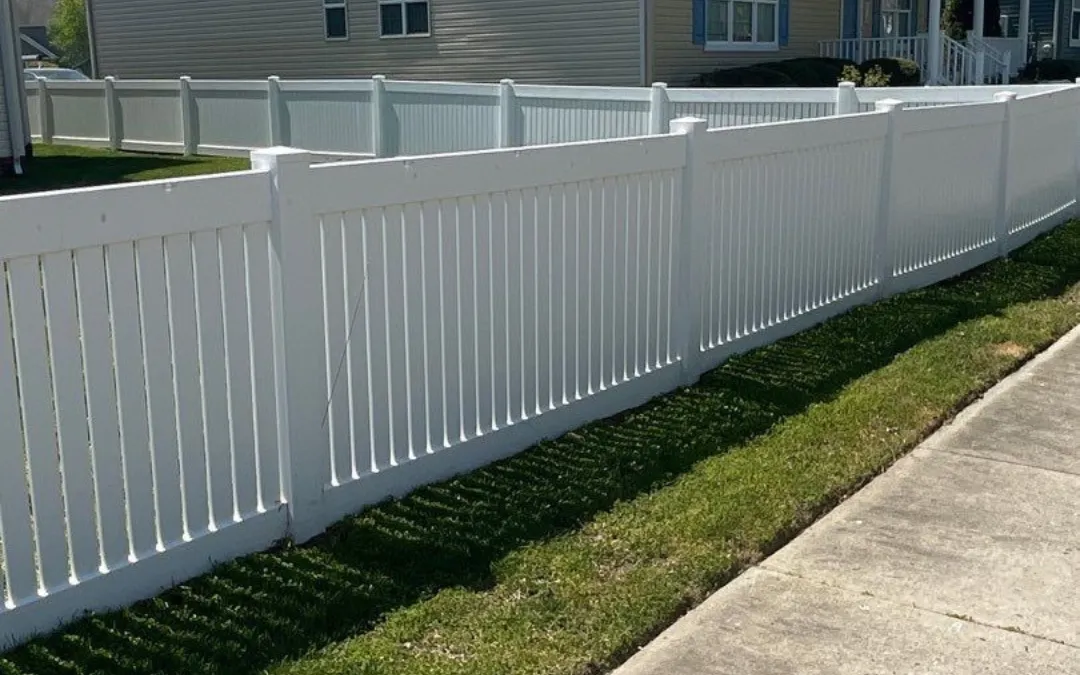
A green fence is almost always algae or mildew. It grows on the side of the fence that gets the least sun and stays damp the longest. On vinyl, a soft wash with a cleaning solution and a gentle rinse removes it. On wood, use low pressure and a wood-safe cleaner, because high pressure can splinter the boards and leave a fuzzy surface.
What the colors on your fence mean
- Green: algae, which grows in shade and moisture
- Black spots: mildew, a type of mold
- Gray wood: sun damage to the wood surface, which is weathering, not dirt
How to clean a vinyl fence
Vinyl is easy to clean but easy to scratch. Use a soft wash solution made for vinyl, let it sit for a few minutes, then rinse with low pressure. Skip harsh scrub pads, which can leave marks that trap more dirt.
How to clean a wood fence
Wood needs a gentle touch. Use a wood cleaner, a wide spray tip, and low pressure. Too much pressure raises the grain and leaves the boards fuzzy. Let the wood dry completely before you stain or seal it.
How to keep a fence clean longer
- Trim shrubs and vines back so air can move along the fence
- Aim sprinklers away from the boards
- Clean the fence once a year before growth builds up
Fence cleaning on Kent Island and in Anne Arundel County
All Hands Pressure Washing cleans wood, vinyl, and composite fences for homeowners in Stevensville, on Kent Island, and across Anne Arundel County. We match the method to the material, so vinyl gets a soft wash and wood gets low pressure and the right cleaner. As one customer, Scott D., put it: “The 2 guys finished my entire house, deck, and both sides of my fence in less than 2 hours.”
See our deck and fence cleaning page or request a free quote.
Frequently asked questions
Does a green fence mean the wood is rotting?
Not usually. Algae sits on the surface. Soft or crumbling spots are a sign of rot and should be checked.
Will fence cleaning hurt my grass or plants?
Not when it is done at low pressure with a rinse before and after.