
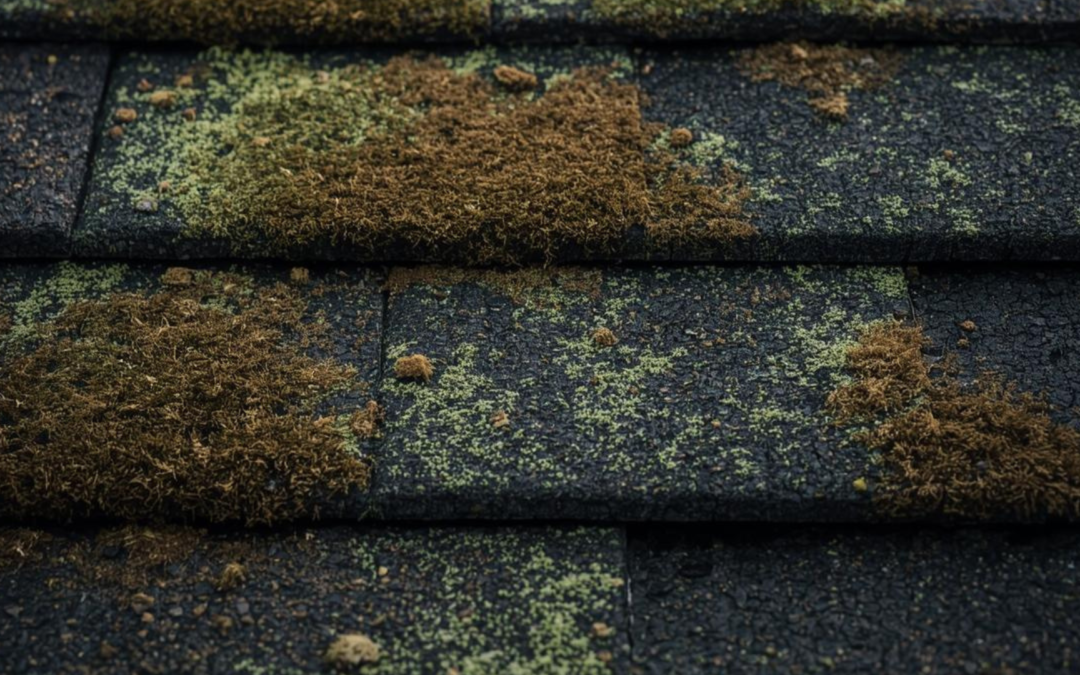
Maryland’s climate creates ideal conditions for algae, moss, and lichen growth on roofing materials. In Stevensville and nearby coastal communities, humidity, frequent shade, and moisture from the Bay combine to help organic growth spread faster than many homeowners expect. That’s why roof stains are common across Kent Island neighborhoods and why it’s smart to know the warning signs before the problem starts damaging your shingles.
Roof stains are not just cosmetic. Over time, contamination can shorten your roof’s lifespan, trap moisture against the surface, and even contribute to higher cooling costs in the summer. This guide explains how to identify roof contamination and how professional roof cleaning helps protect your home.
What Causes Roof Stains in Maryland
In Stevensville, black streaks are often caused by algae that thrives in warm, humid conditions and gradually spreads across shingles in long, dark lines. Moss and lichen are also common in shaded areas, especially where tree cover blocks sunlight and keeps the roof damp after rain. Even if you don’t have heavy growth yet, accumulated tree debris like leaves, pine needles, and small branches can sit in valleys and along roof edges, holding moisture against shingles and creating a breeding ground for organic buildup.
Because Stevensville is close to the water, coastal factors can play a role too. Salt residue and airborne moisture may settle on exterior surfaces, and when combined with humidity, it can contribute to grime and staining over time. Air pollution and general dust can also cling to damp roofing, forming a layer that darkens shingles and makes it easier for algae and moss to take hold. In short, roof stains usually form when moisture is consistently retained on the surface, and in Maryland, that’s a frequent and recurring pattern through much of the year.
Why Dirty Roofs Are a Serious Problem
A dirty roof can quietly reduce the life of your shingles by wearing down the protective granules that help your roof shed water and resist UV exposure. As algae, moss, and lichen spread, they can accelerate shingle deterioration, making the roof more brittle and more likely to crack or curl over time. Moss is especially problematic because it behaves like a sponge, holding water in place and keeping the roof surface wet longer than it should be, which increases the risk of damage beneath the shingles.
That ongoing moisture retention can lead to bigger issues, including softened decking, compromised underlayment, and leaks that may not show up until the damage is advanced. Even before you see interior symptoms, contamination can contribute to structural problems by forcing water to move where it shouldn’t, especially around flashing, valleys, and transitions. A stained roof can also reduce energy efficiency because darker, contaminated areas may absorb and retain more heat, increasing attic temperatures and putting extra strain on your cooling system during hot Maryland summers.
What to Do If You See Roof Stains
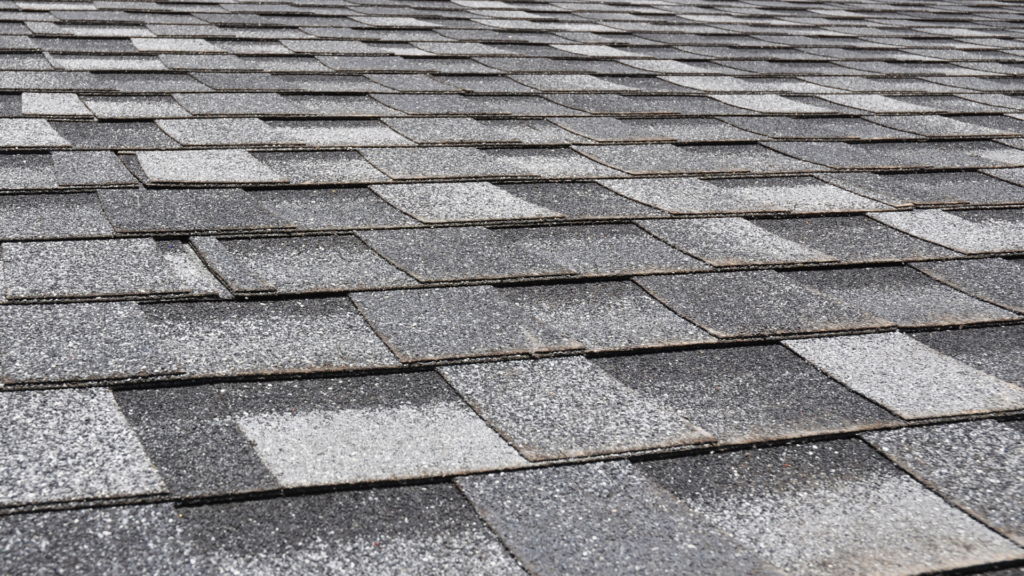
When you notice dark streaks, moss patches, or lichen spots, it’s important to avoid quick fixes that create bigger problems. Pressure washing is one of the most common mistakes because the high force can strip shingle granules, shorten the roof’s lifespan, and drive water underneath shingles where it can damage the roof system. DIY chemical treatments can be just as risky because many store-bought mixtures are too harsh for roofing materials and can cause discoloration, premature wear, or runoff damage to landscaping.
It’s also wise to avoid using straight bleach or strong bleach-heavy mixes. While bleach can whiten the surface temporarily, it’s not always formulated for roofs, it may not address root growth effectively, and it can harm plants, stain exterior materials, and create runoff concerns if it’s not applied and rinsed correctly. The safest next step is to schedule professional soft washing, which is designed specifically for roof materials and focuses on treating the cause of staining rather than blasting the roof clean.
How Professional Roof Cleaning Works
Professional roof cleaning typically uses a low-pressure soft wash method that cleans without the damaging force associated with pressure washing. Instead of relying on high water pressure, soft washing uses roof-safe application techniques and specialized solutions that break down algae, moss, and lichen so they can be safely removed. This approach is especially important for asphalt shingles, which can be easily damaged by aggressive cleaning methods.
A quality service will use eco-safe detergents and treatments that are effective on organic growth while being mindful of surrounding landscaping and exterior surfaces. The process often includes targeted moss and algae treatment to neutralize the contamination and slow regrowth. Many homeowners in Stevensville also benefit from preventative solutions, which help reduce how quickly staining returns, especially in shaded areas or on roof sections that stay damp longer due to coastal humidity.
Why Hiring a Local Roof Cleaning Company Matters
Local experience matters because Maryland roofs deal with very specific conditions that affect how staining forms and how it should be treated. A Stevensville-area professional will be familiar with common roofing materials used in the region and how they respond to different cleaning solutions and application methods. That knowledge helps reduce risk and ensures the process is designed to protect your roof, not just improve appearance.
Coastal weather exposure near the Chesapeake Bay can also accelerate buildup and staining, especially on roofs that face prevailing winds or stay shaded throughout the day. Seasonal algae growth in Maryland tends to spike during warm, humid stretches, and a local company will understand the timing patterns and the prevention steps that work best for properties in communities around the Chesapeake Bay Bridge area. For homeowners near destinations like Matapeake Beach, moisture, salt air, and shade can combine to create faster regrowth, so choosing a company that understands those conditions can make the results last longer.
Why All Hands Power Washing Is the Best Choice
All Hands Power Washing provides roof cleaning that focuses on protecting your roof while restoring curb appeal. Their soft wash roof cleaning process is designed to remove algae, moss, and lichen without damaging shingles, helping homeowners in Stevensville address staining safely and effectively. By using roof-safe detergents, they treat organic growth at the source, which helps reduce immediate staining and supports longer-lasting results.
In addition to cleaning, All Hands Power Washing can handle gutter and roof debris removal so leaves, needles, and buildup aren’t left behind to trap moisture and restart the cycle. Preventative treatments are also available to slow regrowth and keep your roof looking cleaner for longer, which is especially valuable in humid, coastal areas where algae spreads quickly. If your roof is showing dark streaks, moss patches, or persistent discoloration, their team can evaluate the condition and recommend the safest cleaning approach for your specific roof type.
FAQs
What causes black streaks on roofs?
Black streaks are most often caused by algae growth that spreads across shingles and feeds on roofing materials, especially in humid environments like Stevensville.
Does roof cleaning damage shingles?
Roof cleaning does not damage shingles when soft washing is used because it relies on low pressure and roof-safe treatments rather than force.
How often should roofs be cleaned?
Most roofs should be cleaned every one to three years depending on shade, tree cover, humidity exposure, and how quickly staining returns.
Can roof cleaning improve home value?
A clean roof can improve curb appeal and help a home present better to buyers, which can support overall perceived value during a sale.